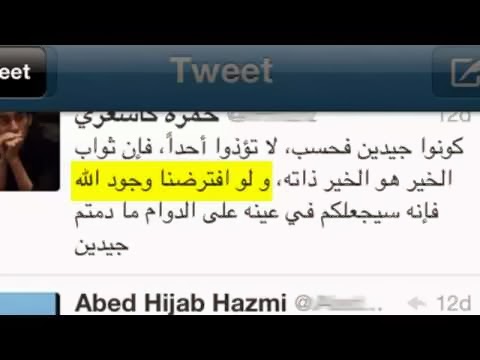
Text of the publication
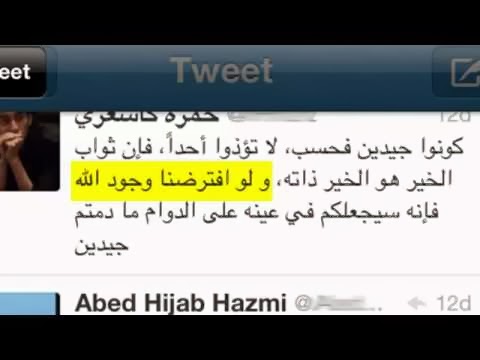
This blogger tweeted: “Just be good. Do not harm anyone, for the reward of goodness is goodness itself. Even if we suppose God exists, He will always keep you in His sight so long as you are good.”
Comment
These words express explicit atheism by treating God’s existence as hypothetical and denying resurrection and recompense for good and bad deeds. Every believer in God and the Last Day rejects this. What many may overlook, however, is the utilitarian interpretation of religion in this atheist’s words. The Center for Studies in the Interpretation of Islam website contains several articles and books criticising this distorted interpretation; we shall refer to some at the end of this comment. Here, however, we wish to draw attention to two matters.
1. First, the emergence of the utilitarian interpretation of religion and its spread among thinkers generally have, regrettably, contributed to the atheism of people such as these. The utilitarian interpretation makes reforming society and being good in our morals and dealings – through truthfulness, trustworthiness, good intentions and so forth – the purpose for which jinn and human beings were created. Acts of worship, according to the explicit statements of many of its advocates, were prescribed only to achieve this purpose. Atheists then take up and sanctify this idea. The result is that the Creator’s existence becomes a hypothesis that may or may not be true. If reforming society is the objective and, in their view, can be achieved without faith in God and the Last Day, why insist on such faith?
2. Second, by correcting people’s beliefs and explaining the reason for their existence and the purpose of their creation – worshipping their Creator and seeking His pleasure to attain His Paradise on the day we meet Him – the Center for Studies in the Interpretation of Islam cuts the tree of atheism at its roots. Atheism denies wisdom in the creation of creatures and treats God’s existence as questionable, since there was supposedly no purpose in creating them in the first place. Improving relations between people, and nothing more, becomes reformers’ only task! The centre’s mission is therefore to explain the most important and noblest purpose of human creation: worshipping God. It explains that this is part of the natural disposition in which people were created, although devils among human beings and jinn have diverted them from it. Just as people’s need for God’s existence is a necessity grounded in natural disposition, reason and revelation, their need to worship Him is likewise a necessity grounded in natural disposition, reason and revelation. God says: “Had there been gods in them other than God, both would have fallen into ruin. Glory be to God, Lord of the Throne, above what they ascribe.” (22) [al-Anbiya’.] People’s wellbeing in worldly life is a fruit and benefit of setting right their relationship with their Creator. God knows best.
Further reading
- Amr Khaled and the Wisdom of Creation
- Succession Means Developing the Earth
- People’s Views on the Benefit and Wisdom of Worship
- Scholarly Efforts to Refute the Political Interpretation of Islam
- Rather, the Political Interpretation Is a Bridge to Secularism
- Worship and Physical Health
- Did Religion Come to Organise Life and Develop the Earth?
- Islam Is Suitable for Every Time and Place
- Were Acts of Worship Prescribed to Protect People from Aggression, Oppression and Injustice?
- The True Teachings of the Qur’an