Text of the publication
Shaykh Dr Usama Haddad, inspector-general of Islamic endowments at Dar al-Fatwa in Lebanon and imam and preacher of Ain al-Mreisseh Mosque in Beirut, related that he met new Muslims from Germany in the Sacred Mosque. They were doctors, some specialising in brain surgery. Before embracing Islam, one had mocked Muslims when he saw them prostrating on the ground, then decided to investigate the benefit. He conducted precise scientific medical studies and found that circulation throughout the whole body is completed during prostration. The longer it lasts, the more blood descends to brain cells; raising the head renews cells, preventing damage and reducing susceptibility to Alzheimer’s and similar brain diseases. The German Muslim said: “Then I became certain: who asked them to do this? God the Creator. I knew this was the true religion.” He added: “We call ourselves ‘the prostration group’.” Dr Usama Haddad said: “What wonderful words! This is marvellous. We left the gathering with our prostration having greater meaning.”
Comment
1. Distinguishing the true religion from false religions requires proof unique to the true religion, demonstrating its truth and establishing grounds for believing and following it. It cannot rest on something shared with other religions, since distinction and preference would then be impossible. Many Islamic rulings are shared with other religions. Proof of the final religion’s truth lies instead in its distinctive proofs, such as the magnificent Qur’an and the evidences of Muhammad’s prophethood, may God bless him and grant him peace.
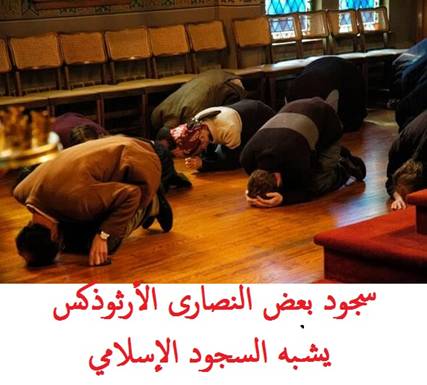
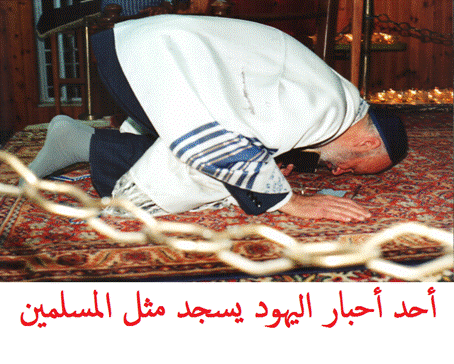
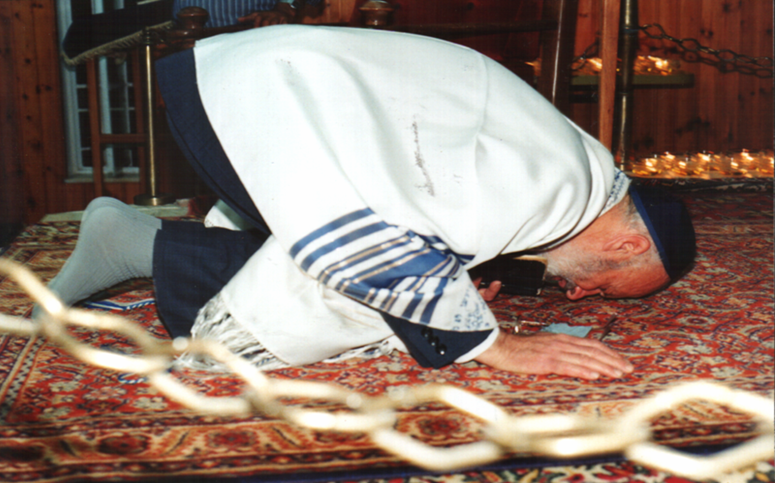
Accordingly, devotional prostration is not peculiar to Islam. It exists in most of the world’s religions. Some Jewish and Christian groups prostrate identically or very similarly to Muslims. [Many articles and pictures about this can be found online.] It cannot therefore serve as a criterion for recognising the true religion.
These brothers, who correctly entered Islam by affirming the Qur’an and Muhammad’s message, pronouncing the two testimonies and observing its rites, are validly Muslim even if they hold mistaken concepts. Yet we fear they may realise that what initially led them to faith, prostration’s benefit, does not prove this religion’s truth and may then turn back, God forbid. We ask God to keep us and them steadfast upon truth and guidance.
2. If this story is true and these people embraced Islam because they discovered prostration’s health benefits, Dr Usama Haddad should have corrected their understanding. He should have explained that prostration in Islam is pure worship of God. Its purpose is devotion to God, humbling oneself before Him, drawing near, seeking His pleasure, expressing the servant’s love of their Creator, glorifying Him and showing humility. Muslims prostrate because God commands it, loves it, approves it from His servants and rewards them for it:
God says: “You who believe, bow, prostrate, worship your Lord and do good so that you may flourish.” [al-Hajj: 77.]
He says: “Prostrate to God and worship.” [al-Najm: 62.]
Describing the Messenger’s Companions, God says: “Muhammad is God’s Messenger. Those with him are firm against unbelievers and merciful among themselves. You see them bowing and prostrating, seeking God’s bounty and pleasure. Their mark is on their faces from the trace of prostration. That is their description in the Torah.” [al-Fath: 29.]
Prostration is among the qualities for which God praises His believing servants: “God has purchased from the believers their lives and wealth in exchange for Paradise. They fight in God’s path, killing and being killed: a true promise binding upon Him in the Torah, Gospel and Qur’an. Who better fulfils a covenant than God? Rejoice in the bargain you have made; that is the supreme triumph. (111) Those who repent, worship, praise, fast, bow, prostrate, command right, forbid wrong and observe God’s limits: give glad tidings to the believers. (112)” [al-Tawbah: 111.]
Muslim (488) narrates from Ma‘dan ibn Talhah al-Ya‘muri: “I met Thawban, the Messenger’s freedman, and asked him to tell me a deed through which God would admit me to Paradise – or, he said, the deeds most beloved to God. He remained silent. I asked again, and he remained silent. The third time he said: I asked the Messenger of God this, and he said, ‘Prostrate frequently to God, for you do not perform a single prostration to Him without His raising you a degree and removing a sin.’” Ma‘dan said: “I then met Abu al-Darda’ and asked him; he told me what Thawban had told me.”
Ibn Majah (1424) narrates from Ubadah ibn al-Samit that he heard the Messenger of God say: “No servant performs a prostration to God without God recording a good deed for them, erasing a bad deed and raising them a degree. Therefore prostrate frequently.”
Muslim (482) narrates from Abu Hurayrah that the Messenger of God said: “The nearest a servant is to their Lord is while prostrating, so supplicate frequently.”
Muslim (489) narrates from Rabi‘ah ibn Ka‘b al-Aslami, may God be pleased with him: “I used to spend the night with the Messenger of God, bringing his water for ablution and other needs. He said, ‘Ask.’ I said, ‘I ask for your companionship in Paradise.’ He said, ‘Anything else?’ I replied, ‘That is it.’ He said, ‘Then help me regarding yourself through abundant prostration.’”
Thus God, the Most High and Great, is angry with a servant who abandons prostrating to Him, excluding them from His mercy and punishing them severely:
“On the day when the shin is uncovered and they are called to prostrate but cannot, (42) their eyes downcast, humiliation overwhelming them. They had been called to prostrate while they were sound. (43)” [al-Qalam: 42–43.]
Prostration is therefore among the angels’ qualities: “Those who are with your Lord are not too proud to worship Him. They glorify Him and prostrate to Him.” (206) [al-A‘raf: 206.]
Refusing to prostrate when commanded is among the qualities of accursed Iblis: “We created you, then formed you, then said to the angels: Prostrate to Adam. They prostrated, except Iblis; he was not among those who prostrated.” (11) [al-A‘raf: 11.] “When We said to the angels: Prostrate to Adam, they prostrated except Iblis. He was one of the jinn and rebelled against his Lord’s command. Will you take him and his descendants as protectors instead of Me, although they are your enemies? What an evil exchange for wrongdoers!” (50) [al-Kahf: 50.]
This is the reality of prostration in Islam: pure worship of God, obedience to Him and compliance with His command. In this respect it is intended for its own sake. It may be called a “means” in the sense of a ritual way of expressing love, obedience, fear, hope, humility, submission and nearness to the Lord of the worlds. It is not enough for these meanings to exist in a believer’s heart. They must become outward action: standing devoutly before God in prayer, with recitation, remembrance, supplication, bowing and prostration.
3. The claim that prostration has health benefits is rationally and practically possible, not impossible. Yet neither is it necessary or inevitable. Prostration may or may not be beneficial in this respect. We nevertheless firmly believe that everything God commands in His law and approves as our religion, in itself and in its implications, results and effects, is truth, goodness, soundness, blessing, guidance, benefit and advantage. None of God’s religious commands contains evil, corruption or harm.
It is therefore unsurprising if scientific and medical studies establish psychological, physical, health or material benefits from performing devotional rites. Such benefits increase a Muslim’s joy in God’s religion and law, without diverting them from the intended purpose of divine legislation and obligation, or the purpose intended in their own sincerity, intention, orientation, prayer, bowing, prostration and all worship. The two purposes are one: worshipping God alone without partner. God says: “I created jinn and human beings only to worship Me.” (56) [al-Dhariyat: 56.] And: “They were commanded only to worship God, sincerely devoting religion to Him, inclining to truth, to establish prayer and give zakat. That is the upright religion.” (5) [al-Bayyinah: 5.]
4. This excessive concentration on prostration’s health and physical benefits is a serious deviation by the standards of Islamic creed. Its origin lies in the creed of extreme philosophers and esotericists, who claimed that the Messenger commanded these acts of worship for the public’s welfare, addressing and commanding people according to their limited understanding and what would improve their behaviour. Otherwise, they claimed, the acts have no reality and do not concern God. Everything he reported of otherworldly reward for performing them or punishment for abandoning them was, they said, a lie the Messenger told for the public interest.
This is the religion of extreme esoteric, heretical philosophers such as Ibn Sina and his like. We assume these new Muslims neither know nor intend this falsehood. Likewise, Dr Usama Haddad neither teaches this false creed nor intends this dangerous meaning. The problem is that presenting prostration’s material benefit in this manner, making it proof of Islam’s truth, an entrance to faith and a discovery of prostration’s reality, end and purpose, follows this esoteric philosophical method and opens a path towards it.
The spread of this concept among Muslims weakens sound realities of faith and religion in their hearts, distorts them in their minds, blocks their path to God, strengthens materialistic and utilitarian tendencies and preoccupies them with these, preparing them to accept the philosophical theory in its purely atheistic form. There is no power or strength except through God, the Most High and Great.
See also
- Prostration and Good Thinking
- Encouraging Prostration by Magnifying Its Worldly Benefits
- Worship and Physical Health
- Alleged Energy and Prostration
- The Two Wedding Prayer Units and Electrical Charges
- Prostration and the Removal of Electrostatic Charges