Text of the publication
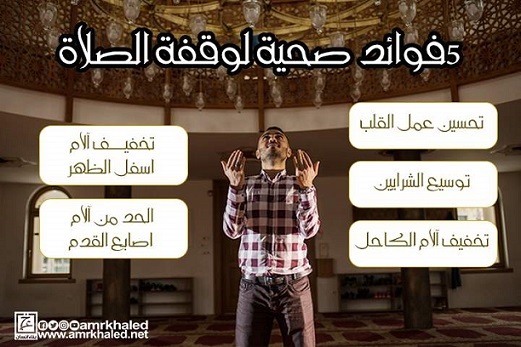
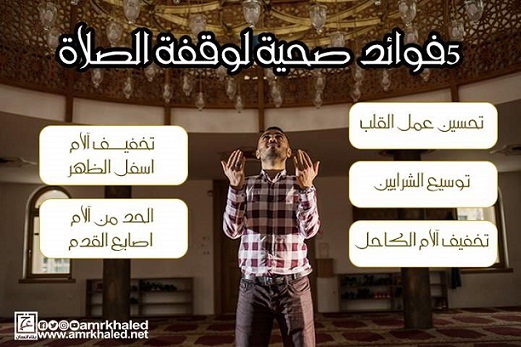
Five health benefits of standing in prayer
Improving heart function; widening the arteries; relieving ankle pain; relieving lower-back pain; reducing pain in the toes.
Comment
1. Prayer is a great act of worship: it is the pillar of Islam and its second foundational obligation, and the first matter about which a servant will be questioned on the Day of Resurrection, among its other merits and marks of its status and immense importance. It should never be presented to people, even under the pretext of encouraging them to pray, in this material, utilitarian form, devoid of expressions of servitude. Indeed, this undermines sincerity and invites people to make worldly life the purpose of worship. God’s words then apply to those who hold such a belief: “Whoever desires worldly life and its adornment, We shall repay them in full for their deeds therein, and they will not be short-changed. (15) Those are the ones who have nothing in the Hereafter except the Fire. What they accomplished there has come to nothing, and their deeds are void. (16)” [Hud.]
2. These benefits, if true, are not peculiar to standing in prayer. Standing in itself is not worship. In prayer it is one component of worship without which the prayer of someone able to stand is invalid, but it does not replace the other components. Together with prostration, bowing and the other pillars and duties, it constitutes worship. There is therefore no point in attaching these benefits specifically to standing in prayer, since, if true, they occur for someone standing anywhere, inside or outside prayer.
3. Highlighting these benefits and assigning them specifically to prayer diverts this act of worship from its purpose and the real basis for prescribing it. It would be better to highlight its expressions of neediness, humility, reverence and servitude before God, which are its purpose and true benefit.
4. It was not the Prophet’s practice to publicise such benefits and foreground them when encouraging worship, even though the occasion for doing so existed and nothing prevented it. Rather, he concentrated on encouraging humility, tranquillity and prolonged devout standing in prayer, in fulfilment of God’s words: “Maintain the prayers, especially the middle prayer, and stand before God devoutly.” [al-Baqarah: 238.] Mujahid said: “‘And stand before God devoutly’: devoutness includes humility and lowering oneself in awe of God. When one of the jurists among Muhammad’s Companions stood to pray, he would not turn aside, move pebbles around or think to himself about any worldly matter, except through forgetfulness, until he finished.” Ibn Jarir al-Tabari (d. 310 AH), may God have mercy on him, Jami‘ al-Bayan ‘an Ta’wil Ay al-Qur’an, 4/382, ‘Alam al-Kutub edition. God knows best.
Further reading
- Prostration and Good Thinking
- Encouraging Prostration by Magnifying Its Worldly Benefits
- Humility in Prayer and the Hormone Endorphin
- Worship and Physical Health