
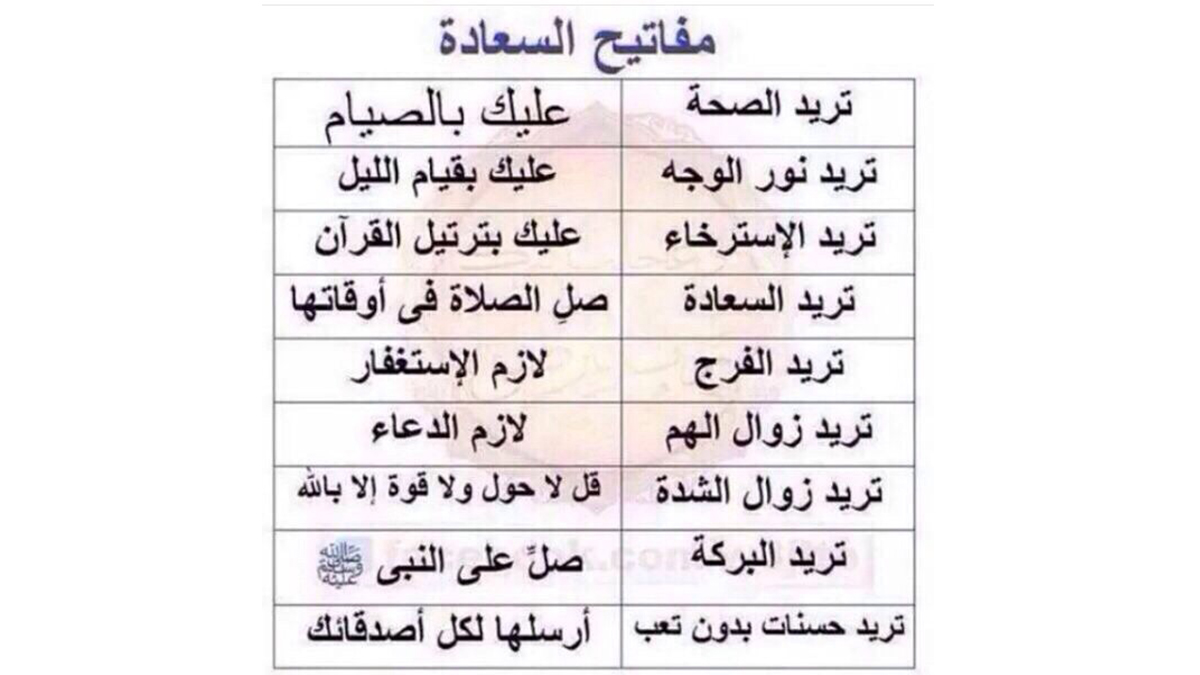
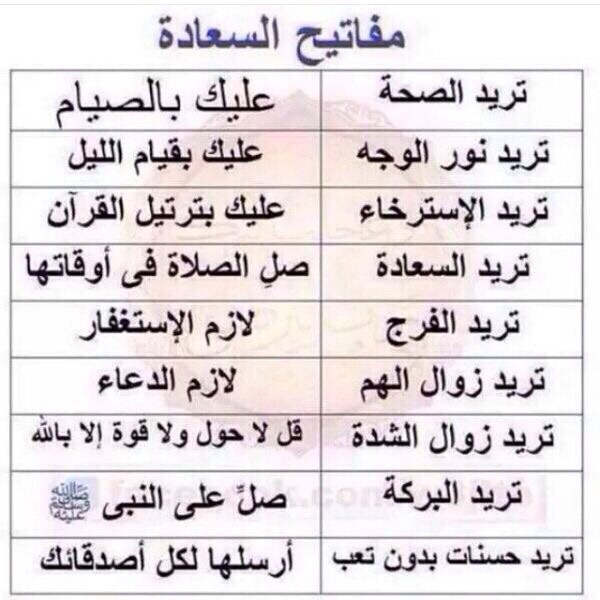
The “Keys to happiness” card
Comment:
1. A believing servant’s happiness undoubtedly lies in believing that God is one in His lordship, divinity, names and attributes. This faith is complete only through following His Prophet, peace and blessings be upon him, willingly and when it is difficult. These two things complete a servant’s happiness in this world and the hereafter. God says: “Whoever does righteous deeds, male or female, while believing, We shall certainly grant them a good life and reward them according to the best of what they used to do” (al-Nahl 16:97). Through the condition “while believing,” a servant attains happiness in both worlds, and God gives them good in this world and good in the hereafter.
He also says: “Whoever turns away from My remembrance will have a constricted life, and We shall raise him blind on the Day of Resurrection. He will say, ‘My Lord, why have You raised me blind when I used to see?’ He will say, ‘Thus Our signs came to you and you disregarded them, and thus today you are disregarded.’ In this way We recompense whoever transgresses and does not believe in the signs of his Lord. The punishment of the hereafter is more severe and more lasting” (Ta Ha 20:124–127). These are the keys to happiness!
Islamic law establishes that uprightness causes happiness, while its opposite causes misery. A servant’s happiness in both worlds corresponds to their uprightness. This is provided happiness is not interpreted as worldly benefits shared by believers, unbelievers, sinners and hypocrites. These benefits are not true happiness. They may even be the source of a servant’s misery and wretchedness in this world before the hereafter.
True happiness lies in the heart and is not contradicted by the trials that befall believers. Indeed, the prophets also experienced worldly trials: “Among those most severely tested are the prophets, then those nearest to them, then those nearest to them.” Ahmad (26539); authenticated by al-Albani in al-Silsilah al-Sahihah (1165).
Our noble Messenger, peace and blessings be upon him, says: “God, mighty and exalted, gives worldly things to those He loves and those He does not love, but He gives religion only to those He loves. Whoever God has given religion, He has loved…” Narrated by Ahmad (3490); authenticated by al-Albani in al-Silsilah al-Sahihah (2714).
Accordingly, ease or hardship in worldly affairs does not depend on a person’s religion.
2. The card says:
“If you want health, you should fast”
And similarly in the rest of the card.
Some acts of worship imposed on a servant undoubtedly have benefits and advantages. These may appear in one person and not another, especially bodily benefits. They may fail to occur because something prevents them. Such benefits are therefore subordinate to the original wisdom: worshipping God, the fundamental basis on which acts of worship are prescribed in the upright religion of Islam.
God says: “People, worship your Lord, who created you and those before you, so that you may become mindful of Him” (al-Baqarah 2:21). He says: “I created jinn and human beings only to worship Me” (al-Dhariyat 51:56). And He says: “They were commanded only to worship God, devoting religion sincerely to Him, inclining to the truth, and to establish prayer and give zakat. That is the upright religion” (al-Bayyinah 98:5).
A servant must therefore not originally intend an act of worship for these benefits. They perform it in obedience to the command, without awaiting a worldly reward from worshipping their Lord. If such worldly benefits occur, they are among God’s blessings upon them. That is God’s favour, which He gives to whom He wills, and God possesses immense favour.
If these benefits and advantages do not occur, that does not affect the servant, because they did not act for them but for God. In worldly affairs, they observe the conduct taught by His words: “So that you may not grieve over what has escaped you nor exult over what He has given you. God does not love anyone who is arrogant and boastful” (al-Hadid 57:23).
See: