
Why Do You Offer a Sacrifice, O Muslim?
Servants of God, we stand at the threshold of a great season of goodness and blessings: virtuous, noble days that God Most High has given an elevated rank among all days. Praise be to God, who has extended our lives and blessed our years. We ask Him, exalted is He, to enable us to perform acts of obedience and accept them from us during these days, the first ten days of Dhu al-Hijjah. The Prophet, may God bless him and grant him peace, said of their virtue: “There are no days in which deeds are better than in these ten.” They asked: “Not even jihad in God’s cause?” He replied: “Not even jihad, except for a man who goes out risking his life and wealth and returns with neither.” Reported by al-Bukhari. Another hadith states: “No days are greater in God’s sight, nor are deeds more beloved to Him in any days than these ten days of Dhu al-Hijjah. So frequently glorify Him, declare that there is no god but Him, proclaim His greatness, and praise Him during them.” That is, frequently say: “Glory be to God; praise be to God; there is no god but God; God is greatest.”
The ninth of these ten days is the Day of Arafah. What will make you know what the Day of Arafah is? It is the day on which God Most High revealed to His noble Prophet: “Today I have perfected your religion for you, completed My favor upon you, and approved Islam as your religion.” It is the day religion was perfected and favor completed, and a day of forgiveness of sins, expiation of misdeeds, and liberation from the Fire. He, may God bless him and grant him peace, said: “There is no day on which God, mighty and majestic, frees more servants from the Fire than the Day of Arafah. He, mighty and majestic, draws near, then boasts of them to the angels, saying: ‘What do these people desire?’” Reported by Muslim.
The tenth of these ten days is the Day of Sacrifice. What will make you know what the Day of Sacrifice is? It is the day of the greater pilgrimage. The Prophet, may God bless him and grant him peace, spoke of its virtue: “The greatest of days in God’s sight is the Day of Sacrifice, then the Day of Rest.” The Day of Rest is the day following the Day of Sacrifice. The virtue of these ten days therefore does not end when they end. The days of Tashriq follow them: the eleventh, twelfth, and thirteenth. The Day of Sacrifice and the days of Tashriq, four days in all, are the days of the blessed Eid al-Adha, our festival as Muslims. Our noble Prophet said: “The days of Tashriq are days of eating, drinking, and remembering God.” He also said: “Whoever is fasting should break his fast, for these are days of eating and drinking.” They are the numbered days of which God, mighty and majestic, said: “Remember God during numbered days.”
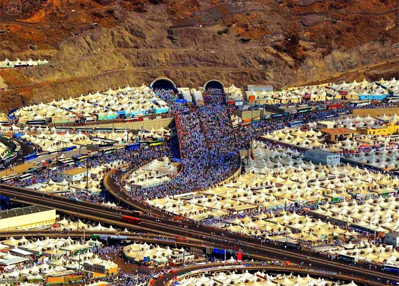
Muslims, these immense virtues and noble distinctions are connected with Islam’s fifth pillar, pilgrimage. Pilgrimage has its particular location in the sacred lands: the Sacred Mosque, Arafah, and Mina. Only those whom God honors with the journey to those pure places, who perform the rites of pilgrimage and umrah and observe their ceremonies as God Most High commands, establish this pillar and attain this merit. Yes, pilgrims possess this distinction, shared only by those whom God grants the blessing of pilgrimage. They are a very small number and a tiny group compared with all Muslims across the earth’s east and west.
In His wisdom and kindness, generosity and goodness, God Most High therefore enabled all Muslims to share with them in honoring these days through remembrance, supplication, fasting, especially fasting the Day of Arafah, and all other righteous deeds. The greatest of these in this season is the sacrificial offering. He, exalted is He, enabled Muslims generally to share with the pilgrims to His Sacred House in a great rite: sacrificial worship. On the day of the greater pilgrimage, the Day of Sacrifice, pilgrims begin slaughtering their offerings, and Muslims everywhere likewise begin offering their sacrifices. He even established a resemblance and correspondence between those offering a sacrifice and pilgrims in certain matters specific to the pilgrim in consecration. Someone intending to offer a sacrifice may not trim his nails or shave his hair until after slaughtering his sacrifice. The wisdom in this is to resemble pilgrims in their disheveled, dusty state, that is, their humble appearance, avoiding adornment and leaving their hair uncombed and nails untrimmed. The Messenger of God said: “When you see the crescent of Dhu al-Hijjah and one of you intends to offer a sacrifice, let him refrain from cutting his hair and nails.” Another wording says: “Let him remove nothing from his hair or skin.” Reported by Muslim.
Servants of God, the sacrificial offering is a great rite of Islam. Millions of Muslims continue to observe it throughout the earth, but many do not understand the reality of this practice of Abraham and Muhammad or bring to mind the meanings of servitude to God while performing it. For many it has become a custom and tradition connected with the festival. Some Muslims in certain countries even take an interest-bearing bank loan to obtain their sacrifice. Many do not pray and commit grave sins, yet offer a sacrifice. Every Muslim who intends to offer one must therefore ask himself: “Why do I offer a sacrifice?” We must whisper into every Muslim’s ear, reminding, advising, and caring for him: “Why do you offer a sacrifice, O Muslim?”
Know, brother in Islam, that slaughter is among the greatest forms of worship. It is a way of worshipping, humbling oneself, and drawing near to God, mighty and majestic, like prayer, zakat, fasting, and other acts of worship. God, exalted is He, says: “Say: my prayer, my sacrifice, my living, and my dying are for God, Lord of the worlds, who has no partner. This I have been commanded, and I am the first of those who submit.” Sacrifice here means slaughter, which in our Islamic law consists of camels, cattle, and sheep or goats. God Most High joined two great acts of worship: prayer and slaughter, or sacrificial worship. He, exalted is He, says in another verse: “We have granted you abundant good. So pray to your Lord and sacrifice.”
Thus slaughtering for other than God Most High is major polytheism that contradicts the foundation of monotheism. Whoever slaughters for other than God commits polytheism that removes him from the faith, God protect us, whether he slaughters for an angel, a messenger, a prophet, a caliph, a saint, or a scholar. All this is associating partners with God, mighty and majestic, and removes its perpetrator from Islam. A person must fear God regarding himself and not fall into the polytheism of which God says: “Whoever associates partners with God, God has forbidden Paradise to him. His abode is the Fire, and the wrongdoers have no helpers.” The Prophet, may God bless him and grant him peace, said: “God has cursed whoever slaughters for other than God.” Reported by Muslim.
Servants of God, this great act of worship is as old as humankind upon the earth. Prophets and messengers taught it to their peoples. The Exalted says: “For every community We appointed a rite of sacrifice, that they might mention God’s name over the livestock He has provided them. Your God is one God, so submit to Him, and give glad tidings to the humble.” The Qur’anic commentators said that the verse means: for every believing community among earlier nations, We prescribed slaughtering offerings so that they might mention God’s name over the livestock He provided, namely camels, cattle, and sheep or goats. The verse means that sacrificial slaughter is not unique to this nation and that mentioning God’s name over it was prescribed before this nation.
Accordingly, we find the worship of slaughter and presenting offerings among most communities of the People of the Book and pagan polytheists. They received this worship from their prophets. Then, when they deviated in their beliefs and fell into polytheism, they began directing this worship to other than God Most High: idols, images, graves, and the dead.
Having understood this, my Muslim brother, know that the sacrificial offering is neither a mere custom nor a tradition nor a celebration for amusement and frivolity. It is an act of worship, like prayer, bowing, prostration, fasting, and all other acts of worship. Hence a recommended practice in the sacrifice is to carry it out personally and slaughter it with one’s own hand. It must include the intention of worshipping God. Whoever slaughters without the intention of worship has slaughtered for meat, not worship. The Exalted says: “They were commanded only to worship God, devoting religion sincerely to Him, inclining to truth, and to establish prayer and give zakat. That is the upright religion.”
Servants of God, we live in a time when knowledge has diminished and ignorance increased. I do not mean ignorance of worldly affairs. Today the doors of material knowledge have been opened to people as they were not opened to their predecessors, until God Most High’s words apply to many of them: “When they forgot what they had been reminded of, We opened to them the doors of everything, until, as they rejoiced in what they had been given, We seized them suddenly, and they fell into despair.” We seek God’s protection from the condition of the unbelievers: “They know an outward aspect of worldly life, but of the Hereafter they are heedless.”
Because of the onslaught of materialist ideas, hearts’ attachment to worldly life, and immersion in it, a dangerous thought has spread among Muslims. In its roots and reality it is atheistic thought that invalidates prophethood and divine law. It is a creed, an idea, and a method that interprets all religion through a utilitarian interpretation. It does not look to realizing servitude to God. It does not consider that the human being is a weak, lowly servant submitting to the Lord of earth and heavens, whom God Most High created for a specific purpose: to worship Him, draw near to Him, humble himself before Him, and turn to Him through different forms of worship and obedience. Instead it interprets religion as a project for developing the earth, building the state and society, serving humanity, and spreading morals and virtues.
This deviant thought takes religion’s good effects and fruits in morals, conduct, and society and makes them the end and purpose of religion as a whole. It thereby invalidates religion’s reality and core and deforms its spirit and essence, making religion and worship merely a means and an intermediary to worldly material and social interests and benefits. Prayer, in their view, is physical exercise and a training course; fasting is psychological, physical, and social health; zakat is social solidarity and socialism; pilgrimage is a political conference and a global demonstration. Thus they invalidate all the realities of worship, religion, and Islamic law.
When we come to this great act of worship, drawing near to God through blood, they say: “It is to feed the poor!” In reality, the purpose of the sacrificial offering is not giving charity to the poor. The sacrifice is a Sunnah, and an obligatory Sunnah for a resident person of means, whether poor people are present or not and whether the person sacrificing needs the meat or not. He must offer the sacrifice to establish this rite and this worship, hoping for no material benefit at all and pursuing no worldly aim. Rather, he sacrifices with the intention of worship devoted solely to God: “Neither their flesh nor their blood reaches God, but your piety reaches Him. Thus He has subjected them to you so that you may magnify God for guiding you. Give glad tidings to those who do good.”
Yes, observing this rite benefits some poor people as a result and fruit. That is, when we perform this worship, the poor may benefit from some of the sacrificial meat. Hence giving some of it in charity is prescribed, as the Exalted says: “Eat from them and feed the contented poor and those who ask”, meaning poor and needy people who ask and those who do not. This command in the verse conveys permission rather than obligation. Hanafi jurists even said: “If he gives it all in charity, that is permissible; if he keeps it all for himself, that is permissible, because the act of drawing near to God lies in shedding the blood.” Imam Ibn Qudamah said: “There is broad latitude in this. If he gives all or most of it in charity, that is permissible. If he eats all of it except an uqiyyah” – an uqiyyah being approximately one hundred to two hundred grams – “if he eats all of it except an uqiyyah that he gives in charity, that is permissible.”
Muslims, gain understanding of your religion, correct your intentions, make your worship sincere, and beware of the ways of those who deviate by distorting the reality of worshipping the Lord of the worlds and corrupting the defining features of religion.
Shaykh Abd al-Haqq al-Turkmani
The article originated as a Friday sermon on 29 Dhu al-Qa‘dah 1434 AH.