
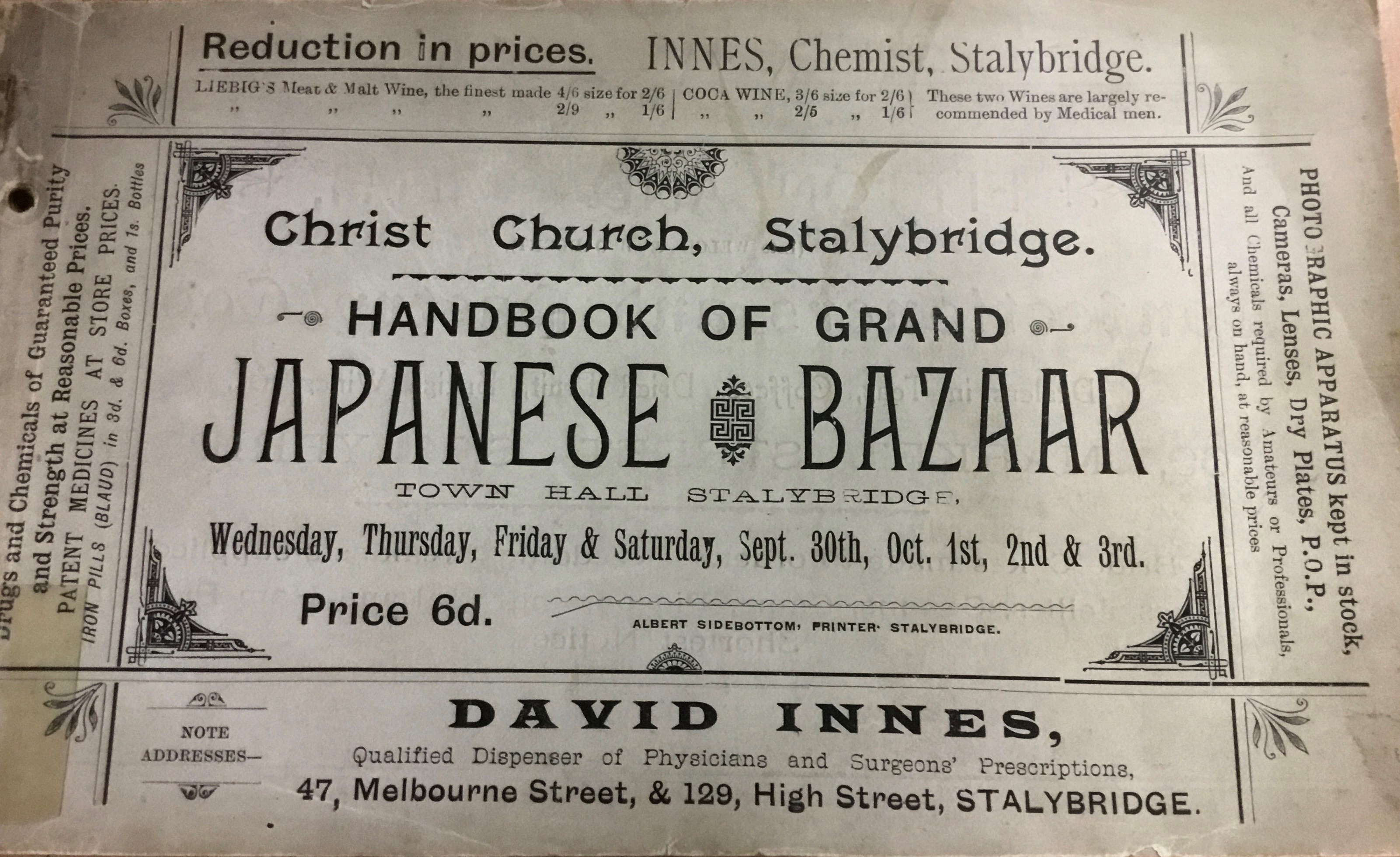
The charity bazaar measured against sincerity in intention and action
Praise belongs to God, Lord of the worlds. I bear witness that there is no deity but God alone, without partner, and that Muhammad is His servant and Messenger. May God bless him, his family and Companions, and grant them abundant peace.
Questions have multiplied about the “charity bazaar,” now widespread among Muslims through charitable organisations working to assist the needy and relieve distress. One method they use to raise money is the “charity bazaar” or “charity market,” sometimes including a “charity auction.” Many Muslims participate intending to give charity in God’s cause and seek reward. Why would they not, when they see people they consider knowledgeable participating, organising them and inviting others as a religious act?
Because this is extremely important, concerning sincerity and intention on one side and the validity of righteous action on the other, the religious ruling on these bazaars and auctions must be explained, in sincere service to God, His religion and Muslims generally and particularly.
Defining the charity bazaar
Bazaar is an old Persian word meaning “market,” widely used in eastern lands and appearing in modern Turkish as Pazar. The Turkish Encyclopaedia of Islam has an excellent entry on it. In its original usage it denotes a city’s public market district. It is also known in English. Although the Encyclopaedia Britannica entry “Bazaar” notes its current English use for a shop selling varied goods or an exhibition selling varied products, sometimes for charity, the word’s most common Western use is for charitable markets and fairs. It is also used for selling traditional or homemade products at festivals and gatherings for particular occasions at a specified time and place.
Our discussion does not concern a bazaar simply as a market, permanent or seasonal, but the expression “charity bazaar.” The charitable qualification takes it beyond an ordinary market governed by ordinary market rules: its intended purpose is charity and benevolence rather than bargaining and profit.
The transaction described
The seller intends to donate the money obtained from sales, either both capital and profit or profit alone. The buyer intends to donate the money paid for the purchase. They may desire or benefit from the item, such as a meal to eat, or want nothing beyond donating its price, as with a painting or old furniture. They may leave the item unattended at the bazaar or auction because the intention is donating money rather than acquiring the item.
Yet the relationship between seller and buyer, in its outward form binding upon both under Islamic law, local custom and national law, is a sale contract, not a donation. They therefore scrutinise prices and account for fractions of currency. This offer and acceptance conclude a legally recognised sale.
The history of the charity bazaar
Knowing its history is the first step towards correct understanding and judgement. This transaction was unknown throughout Islamic history and was adopted by some Muslims from Western traditions.
The charity bazaar appeared in England during the Victorian era, 1837–1901. Hospitals held charitable markets to raise money; churches encouraged and used them too. When attendance at plain charitable markets declined, other attractions were introduced: auctions, theatre and dances. Women entered this field extensively, with famous actresses and dancers among its principal attractions, as documented in Wikipedia’s “Charity bazaar” entry.
The bazaar developed alongside Western life, benefiting from social prosperity, modern means, enthusiasm for entertainment and the hold of materialism and selfishness. It became a festive occasion. Consider the exceptionally organised and lavish Paris charity bazaar of 1897, arranged by the French Catholic aristocracy and attended by over 1,500 people. A sudden fire killed 126 and injured dozens.
The charity bazaar’s conflict with Islamic creed
I know this claim will shock and seem objectionable to most readers: the transaction belongs to practical rulings discussed in jurisprudence, so what connection has it with belief?
Know, Muslim, that intention and sincerity belong to creed’s foundations and faith’s conditions. Charity’s reality in Islam is fulfilling servitude to God through conscious intention and sincerity when spending money. In respect of worship, intention and sincerity, charity belongs to the core of monotheistic creed and faith’s foundations. Whether obligatory, like zakat, or recommended, like other donations, its original and primary purpose is devotion to God, obeying His command, drawing near and seeking His pleasure. The poor person’s benefit is a result and fruit of that servitude.
Unfortunately, many Muslims are ignorant or heedless of this fundamental principle. Many, and saying most would not exaggerate, have come to think charity’s primary purpose is benefiting the poor and needy.
The Qur’an and Sunnah establish this principle explicitly and decisively. Some evidence follows:
1. God associates spending sincerely for His noble countenance with faith and praises its practitioners, while associating spending for worldly aims with hypocrisy and unbelief and condemning it.
In al-Baqarah He says: “Those who spend their wealth in God’s cause are like a grain growing seven ears, each containing a hundred grains. God multiplies for whom He wills, and God is All-Encompassing, Knowing. Those who spend in God’s cause and do not follow their spending with reminders of favour or harm have their reward with their Lord, with neither fear nor grief. Kind words and forgiveness are better than charity followed by harm. God is Self-Sufficient, Forbearing. You who believe, do not invalidate your charities through reminders of favour and harm, like one who spends to be seen by people and believes neither in God nor the Last Day. Such a person is like a smooth rock covered in soil, struck by heavy rain that leaves it bare. They can retain nothing of what they earned. God does not guide unbelieving people. Those who spend seeking God’s pleasure and strengthening their own souls are like a garden on a height: heavy rain falls and it yields twice its produce; if heavy rain does not fall, a drizzle suffices. God sees what you do. Would any of you wish to have a garden of palms and vines with rivers flowing beneath, containing every fruit, then be overtaken by old age with weak children, and have a fiery whirlwind strike and burn it? Thus God clarifies His signs so that you may reflect” (2:261–266).
He also says: “Those who spend their wealth night and day, privately and publicly, have their reward with their Lord, with neither fear nor grief” (al-Baqarah 2:274).
In al-Nisa’: “Those who spend their wealth to be seen by people and believe neither in God nor the Last Day: whoever has Satan as a companion has an evil companion” (4:38).
Of hypocrites who did not intend His countenance: “Nothing prevented acceptance of their spending except that they disbelieved in God and His Messenger, approached prayer only lazily and spent only reluctantly” (al-Tawbah 9:54).
2. Believers therefore seek God’s countenance and the hereafter through charity, without corrupting intention by any worldly aim. Describing the people of Paradise, God says: “They give food, despite their love for it, to the poor, orphan and captive: ‘We feed you only for God’s countenance; we want neither recompense nor thanks from you’” (al-Insan 76:8–9).
He explains that fear of God and seeking His pleasure motivate believers’ eagerness to give: “Those apprehensive from fear of their Lord, who believe in His signs, associate nothing with Him, and give what they give with hearts fearful because they will return to their Lord: these hasten to good deeds and are foremost in them” (al-Mu’minun 23:57–61).
Ibn Majah (4198) and al-Tirmidhi (3175) narrate that A’ishah asked the Messenger about “those who give what they give with hearts fearful”: “Are they people who drink wine and steal?” He replied: “No, daughter of the Truthful One. They are those who fast, pray and give charity, fearing it will not be accepted. They hasten to good deeds and are foremost in them.”
Sincerity is undoubtedly a condition for acceptance of all deeds, including charity. God accepts only what is sincerely for His countenance: “Whoever hopes to meet their Lord should do righteous deeds and associate no one in their Lord’s worship” (al-Kahf 18:110).
Muslim (2985) narrates from Abu Hurayrah: the Messenger said, “God says: ‘I am the One most independent of partners. Whoever performs an act associating another with Me, I leave them and their association.’”
3. Once this great principle is established, a Muslim’s foremost concern becomes correcting intention and sincerity in spending. They look primarily at their own will and action, not the result and fruit. This important doctrinal foundation requires explanation.
A Muslim certainly seeks those most entitled to and in need of charity and strives to prevent it reaching the undeserving, especially someone using it for forbidden purposes such as drug or intoxicant addiction. Yet they firmly believe their charity is not lost even if it reaches someone undeserving. The original aim is relinquishing their money in devotion to God. A deserving recipient’s benefit is the subsequent fruit of that servitude. Failure of the fruit does no harm while the intended foundation and purpose remain fulfilled: worship through giving wealth, paired with life and placed before it in God’s Book. God says: “God has purchased from believers their lives and wealth in exchange for Paradise” (al-Tawbah 9:111), and: “Believers are only those who believe in God and His Messenger, then do not doubt, and strive with their wealth and lives in God’s cause. They are the truthful” (al-Hujurat 49:15).
The Messenger relates a practical example of this belief:
Al-Bukhari (1421) narrates from Abu Hurayrah: “A man said, ‘I will give charity.’ He went out and placed it in a thief’s hand. In the morning people said, ‘Charity was given to a thief!’ He said, ‘God, praise belongs to You. I will give charity.’ He went out and placed it in a prostitute’s hands. People said in the morning, ‘Charity was given tonight to a prostitute!’ He said, ‘God, praise belongs to You, to a prostitute! I will give charity.’ He went out and placed it in a wealthy man’s hands. People said, ‘Charity was given to a wealthy man!’ He said, ‘God, praise belongs to You, for a thief, a prostitute and a wealthy man!’ He was then told: ‘Your charity to the thief may cause him to refrain from theft; the prostitute may refrain from prostitution; and the wealthy man may take heed and spend from what God has given him.’”
“He was told” means he was shown this in a dream, as in Ahmad (8602).
Al-Bukhari (1422) narrates from Ma‘n ibn Yazid: “My father Yazid put dinars with a man in the mosque for charity. I came, took them and brought them to him. He said, ‘By God, I did not intend you!’ I took the dispute to the Messenger, who said: ‘Yazid, you have what you intended; Ma‘n, you have what you took.’”
Ibn Hajar says in Fath al-Bari, 3/292: “The hadith shows that the giver receives reward for what they intended, whether or not the deserving recipient was reached.”
4. Having fulfilled sincerity, the first condition, a Muslim must not neglect the second condition for charity’s validity and acceptance: conformity to Islamic law, avoiding acts contrary to God’s Book and His Prophet’s Sunnah. Both conditions must coexist: sincerity towards God and following His law.
Al-Bukhari (2697) and Muslim (1718) narrate from A’ishah: “Whoever introduces into this affair of ours what does not belong to it, it is rejected.” Muslim also narrates: “Whoever performs an act not in accordance with our affair, it is rejected.”
Ibn Rajab says in Jami‘ al-‘Ulum wa-l-Hikam, 1/176 (5): “This hadith is a great foundation of Islam and a measure of outward deeds, just as ‘Actions are by intentions’ measures their inward aspect. Every act not intended for God’s countenance brings its performer no reward. Likewise, every act not according to God’s and His Messenger’s command is rejected. Whatever someone introduces into religion without their permission does not belong to religion.”
The charity bazaar as a manifestation of material culture and modern liberal life
As mentioned, charity bazaars arose in the modern West to extract donations from the wealthy after atheistic doctrines appeared, materialism took hold and religious motives for charity weakened or disappeared. Some charity workers saw no way to obtain money except inventing “roundabout methods” offering a share to materialistic, miserly selves and an immediate result for spending, such as dances, theatre and delicious meals. Immediate pleasures motivated giving.
Those heedless of God and the hereafter are understandably moved towards benevolence only by material and utilitarian means bringing them immediate enjoyment and benefit before any later benefit reaches the poor, if the organisations fulfil their promises. This accords with: “Have you seen the one who denies judgement? That is the one who repels the orphan and does not encourage feeding the poor” (al-Ma‘un 107:1–3). If such a person pities an orphan or feeds the poor, the motive is not faith in God and the Last Day but other psychological, utilitarian, material or social impulses.
A manifestation of this materialism, indeed selfishness, is insistence on tangible evidence of charitable giving: a participation certificate or a symbolic purchased object. Someone buys a painting for a vast sum and hangs it prominently. Every visitor receives an immediate account of its purchase at a charity auction to assist cancer patients or fight polio. Yet the cancer and paralysis lie in the corrupt intention and boasting, unlike the believer who says: “We feed you only for God’s countenance; we want neither recompense nor thanks from you” (al-Insan 76:9).
These materialists and utilitarians lack both conditions of righteous action observed by Muslims: sincere intention towards God alone and conformity to His religion and law. They neither seek His countenance nor observe His rulings.
Without these conditions they adopt any means to their end, even means forbidden by Islamic law or repugnant to sound nature, reason and noble souls. A reasonable person need only examine these bazaars and most participants’ conduct:
- At open buffets, luxurious halls are hired and varieties of food and sweets served. Participants enjoy and select the finest. Gatherings are generally not free from extravagance, waste, adornment and boasting. They leave delighted because perhaps one seventieth of what they enjoyed may reach some poor people.
- At charity-bazaar festivals they gather in fine clothes and visible adornment, entertaining themselves through singing, dancing, beautiful images, decoration and joy. The proceeds of their festival, amusement and luxury support victims of deadly war, devastating earthquake or widespread disaster whose souls are filled with pain, sorrow, distress and depression. Imagine a victim present and told: all this luxury, extravagance and entertainment springs from sympathy for you, to assist you and extend a helping hand.
- The foolishness of bidding for something trivial with no intrinsic value is a kind of madness difficult to understand or explain.
A worthy acquaintance told me he attended a charity auction held by an “Islamic” organisation. Once everything was sold, an organiser offered a single banana lying on the table. A “benefactor” bought it for ten thousand dollars, then left after the event forgetting to eat or take it.
This absurd conduct reminds me of the sale of a pregnancy test used by the famous singer Britney Spears. A charity auction in 2005 sold it for five thousand dollars.
An internet search reveals many incidents contrary to sound nature and reason labelled “charitable work.”
A Muslim, however, is constrained in intention and action: seeking only God’s countenance and doing only what pleases Him.
Religious rulings on charity-bazaar transactions
Many activities occur at these bazaars. Individual actions cannot be judged correctly without understanding their precise form. Having described the general form, I shall detail transactions and their rulings.
First form
Individuals or groups offer goods for sale intending to donate the receipts, profit alone or both profit and capital. Buyers purchase intending charity.
This is a valid sale contract.
The seller receives reward for donating capital or profits because the donation comes from their own wealth with prior sincere intention towards God.
If participation instead seeks publicity for a company or products, market presence, competition or other worldly ends, God knows the intention. Reward extends only to what was intended for Him. The Messenger said: “Actions are only by intentions, and each person has only what they intended. Whoever migrates to God and His Messenger, their migration is to God and His Messenger. Whoever migrates for worldly gain or a woman to marry, their migration is to what they migrated for.”
The buyer acquires the purchase through a valid sale. This is an ordinary transaction with no connection in itself to worship or devotion.
The buyer is therefore not a charitable donor under Islamic law and does not receive charity’s reward: money was paid as a price for a known return received, whether subsequently used or not. Claiming this buyer is legally a donor and the act a form of charity in its religious meaning is false and rejected.
Second form: the open buffet
Like the first, payment for entry creates a valid sale contract according to many contemporary jurists, the correct and stronger position. Others prohibit it because of uncertainty and risk. This form has no connection to charity. Whoever claims eating at the buffet is charity prescribed by Islamic law makes a grave false claim against God.
Third form: the charity auction
Like the first two, this is a valid sale unless invalidated by a cause such as selling what one does not own or what is prohibited. It is not itself charity or devotion. Whoever sells at auction, receives payment and donates it receives charity’s reward. The buyer receives none of that, however exaggerated the price increase.
The foolishness and absurdity of some auctions, such as selling a banana for ten thousand dollars, require further description and condemnation. Such a person loses money without reward and is a fool who should be disciplined and placed under financial restriction: “Do not give the foolish your wealth which God has made a means of support for you” (al-Nisa’ 4:5).
Fourth form: donations in kind
Organisers request goods from factories, companies and warehouses to sell and use the proceeds for good causes. This encourages owners to donate stock, especially when cash donations feel burdensome.
This involves three parties:
- The donor of goods: a valid charitable donation, rewarded when intended for God’s countenance.
- The organisers: rewarded for their efforts in good causes according to intention.
- The buyers: acquiring paid-for goods through valid sales. Their transaction is ordinary and is not itself charity or devotion. But they are rewarded if intending to encourage organisers and help the project succeed, just as someone deliberately buying from a poor seller to assist rather than give charity performs an act of goodness, as explained below.
Fifth form: markets supporting craftspeople, producers and homemakers
Some governmental or community bodies facilitate marketing and sales for traditional craftspeople, small food and goods producers, and self-reliant homemakers selling handicrafts, textiles or homemade food. These people struggle greatly to market their goods. Organisations assist by providing suitable venues, publicising the market and encouraging purchases to support this vulnerable part of society.
This lies entirely outside our criticism. It is a good example of social solidarity, cooperation in righteousness and mindfulness, and seeking self-sufficiency. Transactions are purely commercial, unrelated to charity. Yet buyers intending to assist sellers, preserve their independence and help their efforts succeed are undoubtedly rewarded for that good intention. The Messenger said: “Whoever eases the burden of someone in hardship, God will ease their affairs in this world and the hereafter. God helps a servant while the servant helps their brother.” Muslim (2699).
Likewise, a buyer may consider a seller’s circumstances and choose to buy from them as assistance, or pay extra intending the excess over the normal price as charity without embarrassing them. All are righteous deeds carrying reward.
These are the most common forms. Perhaps knowledgeable readers will point out others for me to add here.
Conclusion
This concludes the article intended to alert fellow students, leaders of Islamic organisations and Muslims generally to the reality of the charity bazaar or charity market: its conflict with principles of faith founded on sincerity and seeking divine reward, and with Islamic law and its objectives. Its invention originated among materialists and utilitarians and is foreign to Muslim conduct and morals. Muslims must avoid the objectionable forms identified, neither organise nor participate in them, warn against them, and explain their harm to belief, intention and sincerity and their resemblance to those heedless of God and the hereafter.
Praise belongs to God, Lord of the worlds.
Written by Abd al-Haqq ibn Mulla Haqqi al-Turkmani
Leicester: Thursday, 27 Rabi‘ al-Awwal 1445 AH, corresponding to 12 October 2023