Text of the publication
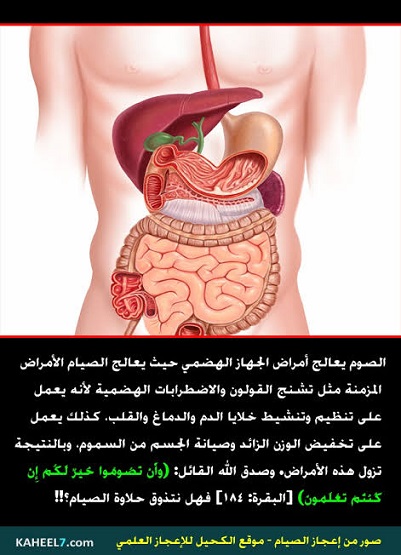
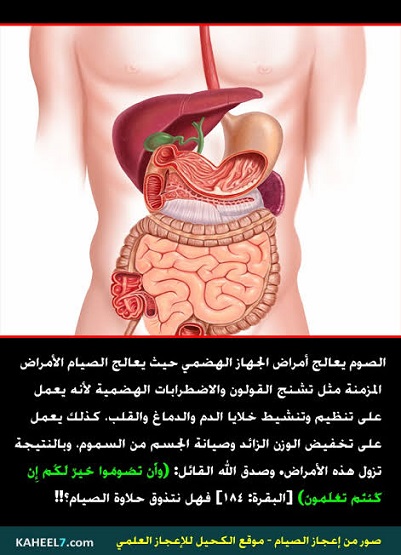
“Fasting treats diseases of the digestive system. It treats chronic conditions such as colonic spasms and digestive disorders because it regulates and stimulates blood, brain and heart cells. It also reduces excess weight and protects the body from toxins, causing these diseases to disappear. God speaks the truth when He says, ‘Fasting is better for you, if you only knew’ [al-Baqarah: 184]. Shall we, then, taste the sweetness of fasting?!”
Comment
1. In many earlier articles we discussed promoting and circulating such benefits and explained the conflicts with Islamic law involved. We stated that such benefits, if mentioned, should be mentioned only in a subordinate capacity. We have always warned against treating acts of worship as therapeutic medical prescriptions stripped of the spiritual meanings that are the wisdom behind their prescription. At the centre of these meanings is worshipping God, exalted and majestic.
2. What stands out in this publication is the statement following its list of health benefits: “God speaks the truth when He says, ‘Fasting is better for you, if you only knew’ (184) [al-Baqarah]. Shall we, then, taste the sweetness of fasting?!”
Tasting the sweetness of fasting is undoubtedly part of tasting the sweetness of worship, itself part of tasting the sweetness of faith. The Prophet, may God bless him and grant him peace, explicitly stated that the sweetness of faith lies in loving God and His Messenger and loving for the sake of God and His Messenger. He said: “Three qualities, if present in someone, enable that person to find the sweetness of faith: that God and His Messenger be dearer to them than anything else; that they love another person only for God’s sake; and that they hate returning to unbelief as they would hate being cast into the Fire.” Al-Bukhari (16). He further stated that tasting this faith depends on three foundations: “Being content with God as Lord, Islam as religion and Muhammad as Messenger”, as narrated by Muslim (56).
Anyone who knows these great meanings and what it means to savour obedience in the prescribed way, but then locates obedience’s sweetness in acting to obtain immediate benefits, has understood neither the reality of worship nor the true purpose of its prescription. Peoples have gone astray over this! Whoever makes refining morals and governing people to improve their worldly lives the purpose of these acts of worship resembles philosophers such as Ibn Sina, al-Farabi and others in this respect. Beware, then, of following their path, and steer clear of their approach. Know, Muslim brother, that one of the first snares by which they capture people is discussing the objectives of worship apart from the guidance of the Book and the Sunnah and the understanding of the community’s scholars. God guides to the straight path.
Further reading
- The Major Objectives of Fasting
- Refuting the Utilitarian Interpretation of Fasting
- The Purpose of Fasting, by Shaykh Ibn Uthaymin
- Have You Heard of Penguins’ Fasting?
- Fasting and Maintaining Immunity