
The Forty-Sixth Misgiving: Concerning the Purpose of Islam, and the Response to It
By the scholar Shaykh Abd Allah ibn Ali ibn Yabis, who died in 1389 AH/1969 CE.
In response to the Shaykh of al-Azhar, Mahmud Shaltut, who died in 1383 AH/1963 CE.
He said on p. 440: “Islam was only a religion intended to manage people’s interests, achieve justice and preserve rights. It did not come to demolish everything people had, in order to establish a new structure on its [foundation].[1]”[2]
The response has several aspects:
First: he claims that Islam did not come to demolish everything people followed in the age of ignorance in order to establish a new structure on its foundations. This reflects ignorance, or wilful disregard, of the condition of the earth’s people before Islam. Their moral, social and creedal condition was chaotic in every respect. The strong devoured the weak; tribal fanaticism, injustice and selfishness dominated corrupt societies; and judgements followed corrupt laws and oppressive custom.
The whole earth lay in the pitch darkness of ignorance, unbelief and degrading tyranny. The Prophet, peace and blessings be upon him, said: “God looked upon the people of the earth and detested them, Arabs and non-Arabs, except remnants of the People of the Book.”[3] God says: “It is He who sent among the unlettered a messenger from themselves, reciting His verses to them, purifying them and teaching them the Book and wisdom, although before they were in manifest error” [al-Jumu‘ah: 2]. Does Shaykh Shaltut object to Islam having come to demolish the pillars of clear and manifest error?
It is enough that people’s condition and system before the prophetic mission were called ignorance. Islam undoubtedly came to demolish that ignorance, its foundations and system, and raise from Islam, its foundations and system, a mighty, towering structure by which souls are protected and hearts guided.
Second: Islam did not come merely to construct and enhance worldly life. First and foremost, it came to acquaint people with worshipping God alone, without partner, commanding that worship and prohibiting what corrupts it. This is the highest purpose of Islam’s coming.
The evidence is God’s statement: “I did not create jinn and humankind except to worship Me” [al-Dhariyat: 56]. This verse informs people of the intended purpose of creating jinn and humans: worshipping God alone. God also says: “A Book We have sent down to you so that you may bring people out of darkness into light, by their Lord’s permission, to the path of the Mighty, the Praiseworthy” [Ibrahim: 1]. This verse clearly explains that the Book was revealed to bring people from the darkness of ignorance, its systems, morals and customs into Islam’s light, by God’s command, so that they may follow the straight path, the true religion.
In Surah al-Nahl, God enumerates His blessings upon His servants: bringing them from nonexistence into existence, hearing and sight, explaining His signs, providing houses from livestock skins to carry when travelling[4] or settling, furnishings and goods from their hair and wool, and creating shade, shelters, garments protecting from cold and heat and others protecting in battle. After mentioning these blessings, He says: “Thus” [al-Nahl: 81] He brought you into being and lavished these blessings upon you, “so that you may submit” [al-Nahl: 81]. He thus states that all His blessings were sent to His servants so that they might submit to His religion and follow His commands.
The Shaykh, however, claims that Islam came only to manage worldly interests, and not to demolish the preceding ignorance and build a firm structure on its foundations. Worshipping God alone without partner, following His commands and avoiding His prohibitions, which constitute His religion, can be fulfilled only through justice and preservation of rights. Islam therefore brought a law guaranteeing all worldly and religious interests for those following its guidance, so that God may be worshipped with insight and tranquillity. But claiming that Islam came primarily and in itself to reform this world rather than the hereafter, without leading people to worship God alone and obey His religion, is false and misleading.
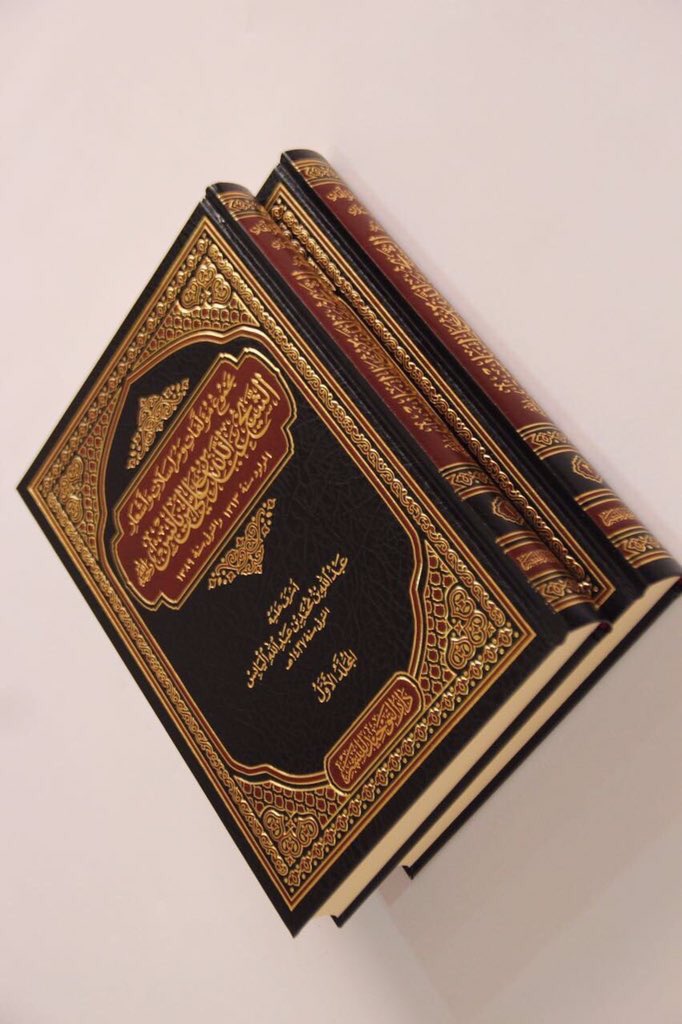
From Informing Humanity of the Shaykh of al-Azhar Shaltut’s Contradiction of Islam, by Shaykh Ibn Yabis, in The Collected Writings, Correspondence and Poetry of Shaykh Abd Allah ibn Ali Ibn Yabis, May God Have Mercy on Him, supervised by Abd Allah ibn Muhammad ibn Abd Allah al-Yabis, Dar al-Tawhid, first edition, 1438 AH/2017 CE, 1/178-181.
[1] In Islam: Creed and Law, the wording is “ruins”.
[2] Mahmud Shaltut, Islam: Creed and Law, p. 482.
[3] Reported by Muslim, 2, no. 2865, from Iyad ibn Himar.
[4] This is the correct reading; the printed edition misspells za‘n, “travelling”.